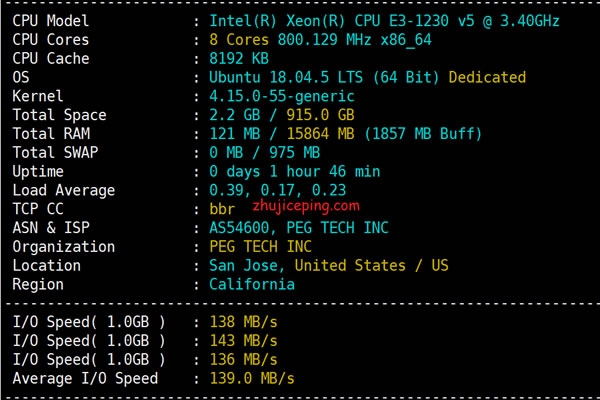
In this article, we explore “why server hosting in U.S. Cera data centers has become the preferred node for content distribution.” Guided by SEO and GEO optimization, this article provides references and practical advice for selecting nodes suitable for websites, streaming services, and applications, based on key factors such as network connectivity, latency, bandwidth, security compliance, and scalability.
Overview and Geographic Advantages of Cera’s Data Centers in the United States
U.S. Cera data centers are typically located in strategic positions between network backbones and major cities, which gives them excellent coverage across North America. For websites and applications that wish to deliver content quickly to users in the Americas, choosing data centers that are geographically close and have strong connectivity is a fundamental advantage.
The importance of geographical location and network connectivity
Geographical location directly affects the number of routing hops and physical transmission distance, thereby impacting latency and packet loss rates. If U.S. Cera data centers are located adjacent to major switching hubs or fiber optic landing points, they can provide more stable outbound bandwidth and fewer inter-network hops, which helps improve content distribution efficiency.
Bandwidth Resource and Link Redundancy Assessment
Content distribution has high and volatile demands for upstream bandwidth. The server room should provide multiple uplinks and bandwidth flexibility to handle peak traffic. When evaluating, attention should be paid to link redundancy, peer-to-peer interconnection, and direct connections with major operators, rather than single-supplier lock-in.
The relationship between latency, packet loss, and user experience
Low latency and low packet loss directly improve page loading, video startup, and interactive experiences. With multi-point direct connections and a high-quality backbone network, U.S.-based Cera data centers can effectively reduce round-trip latency (RTT), which is particularly beneficial for real-time communication and the distribution of live content.
The impact of security and compliance on content distribution
Hosted nodes must have comprehensive physical and network security mechanisms, including access control, monitoring, and DDoS protection capabilities. Content distribution must not only focus on speed but also ensure data integrity and business continuity; security is an important factor in selecting optimal nodes.
Physical Security and Network Protection Measures
The access control, surveillance, power redundancy, and fire protection design of the server room determine physical availability ; At the same time, traffic filtering at the network layer, firewalls, and intrusion detection can defend against common attacks. When choosing a hosting provider, it is necessary to verify the data center’s security certifications and emergency response capabilities.
Compliance and data sovereignty considerations
Different businesses must comply with regional regulations and privacy policies. When handling cross-border data transfers, U.S.-based Cera data centers should support compliant configuration and log auditing to meet customers’ content distribution needs under compliance requirements such as GDPR and CCPA.
Scalability, Operations & Cost-Benefit Analysis
For content distribution, the elastic scalability of nodes and operational efficiency directly affect long-term costs and business resilience. If U.S.-based Cera data centers can provide automated deployment, monitoring and alerting, as well as rapid scaling capabilities, it will significantly reduce operational complexity and failure recovery time.
The practical value of elastic scaling and operational efficiency
Automated and containerized, virtualized hosting environments help to respond quickly to fluctuations in traffic. Efficient APIs, monitoring panels, and technical support can shorten time-to-market and troubleshooting times, improving the availability of content distribution nodes and their ability for continuous optimization.
Summary and Recommendations
Overall, server hosting in U.S.-based Cera data centers offers significant advantages in terms of network connectivity, low latency, security compliance, and scalability for content distribution. It is recommended to conduct a multi-dimensional evaluation of bandwidth redundancy, direct connection status, and security capabilities when selecting nodes. Additionally, hybrid deployment should be considered based on the geographical distribution of target users and business characteristics, to achieve optimal content delivery.
- Latest articles
- Buying Cloud Servers In Thailand: How To Quickly Deploy Your Business Using Images And Templates
- Steps And Common Problem Solutions For Deploying A Native IP Server In Vietnam From Scratch
- Does High VPS Latency In Telecom Korea Affect SEO And User Retention? Data Evaluation Methods
- Taiwan Telecom CN2 Broadband Performance In Remote Work And Video Conferencing Tests
- Industry Case: Differences In The Performance Of Cloud Servers In Hong Kong And Singapore In The Financial And Gaming Industries
- How To Choose A Vietnam Cloud Hosting VPS Rental - A Guide To Comparing Merchants And Bandwidth Nodes
- Interpretation Of Alibaba Cloud Singapore's CN2 Access Advantages And International Network Layout Recommendations
- A Guide Comparing The Best Performance And After-sales Service For VPS Rental Platforms In Hong Kong Under Enterprise-level Needs
- How To Securely Ship Servers To Hong Kong For Hosting: Packaging, Labeling, And Tracking Advice
- How To Improve System Fault Tolerance With Vietnamese Server Sci-fi Warship-style Designs
- Popular tags
-

Service Quality Evaluation Of Hat Cloud American High-defense Server
This article will conduct in-depth evaluation of the service quality of Hat Cloud's American high-defense server, including its performance, stability, security and customer support. -

How To Choose A Suitable Node To Deploy The American Station Group Proxy Ip Server To Achieve High Availability
this article introduces how to choose suitable nodes to deploy the us station group proxy ip server to achieve high availability, covering key points such as node type, geographical location, bandwidth concurrency, disaster recovery switching, monitoring and security compliance, etc., to help the engineering and operation and maintenance teams make technical decisions. -

Guide To The Customization Service Process And Delivery Cycle Of Us High-defense Servers Under Customized Needs
this article is "a guide to the customization service process and delivery cycle of u.s. high-defense servers under customized requirements". it systematically introduces the key steps from demand assessment to delivery acceptance, factors affecting the delivery cycle, and acceleration strategies. it is suitable for project parties and operation and maintenance teams seeking u.s. high-defense server customization services.